
Direct Answer
Private label puts your logo and packaging on an existing product. OEM means you define the specification and the factory builds to it. ODM means the factory designs the product around your market requirement, and you brand it. Most brands start with private label, move to OEM once volume justifies a specification, and use ODM when they need a product competitors cannot buy.
Key Takeaways
- The three models differ in one thing: how much of the design you control and how much you pay to control it.
- Private label is fastest and cheapest to launch but gives you no product differentiation.
- OEM and ODM both require tooling or development decisions that raise MOQ and lead time.
- Tooling ownership should be written down. If you pay for a mould, confirm in the contract that it is yours.
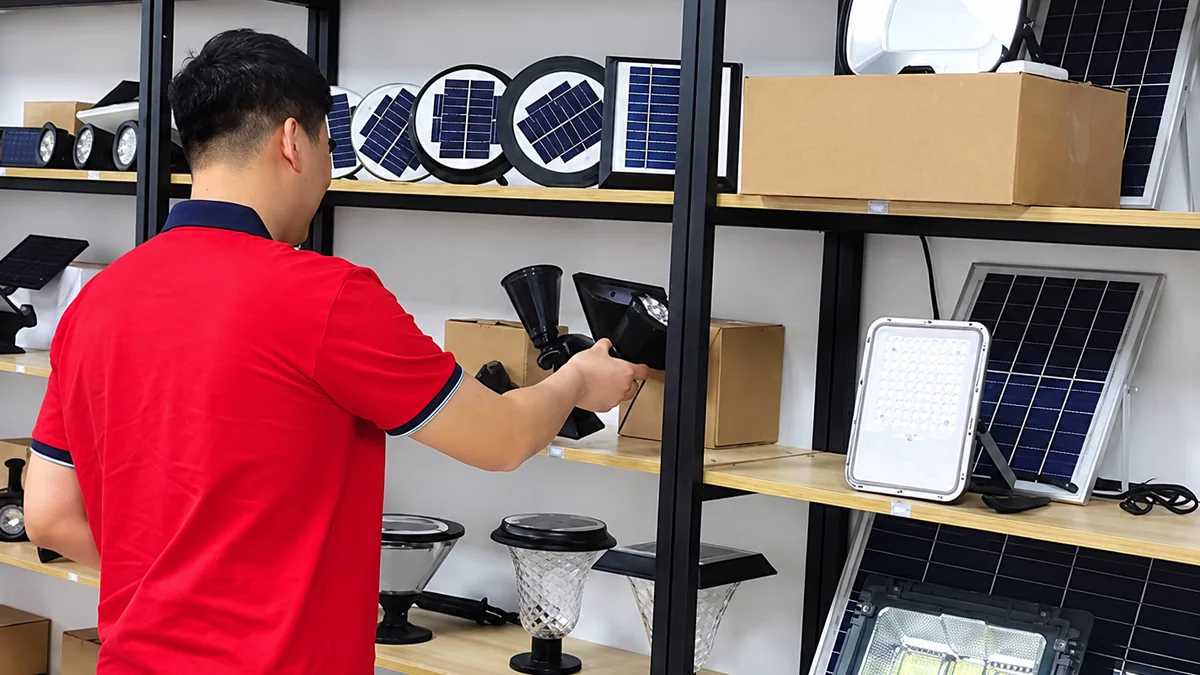
Three terms, three amounts of control
The three terms are used loosely across the industry, and suppliers often use them interchangeably because buyers ask for them interchangeably. The distinction that matters is control: who decides what the product is, and who owns the result.
In private label, the factory decides and you brand. In OEM, you decide and the factory builds. In ODM, the factory decides initially but designs to your brief, and you brand the outcome. Everything else, including MOQ, lead time and risk, follows from that split.
Private label: the fastest route to a branded product
Private label is the model most first-time brands actually need. You choose an existing model from a supplier's range and change the branding: logo on the housing, your name on the retail box, your barcode, and often a gift box and master carton printed to match. The product itself, including panel, battery and LED, stays as designed.
The advantages are real. There is no tooling investment, samples are available immediately, and the compliance documentation already exists for the model because it is being shipped in volume. A brand can be selling within weeks rather than quarters.
The disadvantage is equally real: your competitor can buy the same product and put a different logo on it. Private label buys speed and low risk, not differentiation. That is a perfectly good trade at launch and a poor one at year three if the brand has no other reason for customers to choose it.
OEM: you own the specification
In an OEM arrangement you write the specification: panel wattage, battery chemistry and capacity, output in each mode, colour temperature, sensor behaviour, IP rating and packaging. The factory builds and tests against that document, and the product carries your brand.
This is the model that solves a specific market problem. A buyer selling into a market with dark winters can specify a larger panel than the stock model carries. A buyer whose customers complain about nuisance triggering can specify a different sensor threshold. Neither change is possible in private label, because the product was designed for an average market rather than yours.
OEM usually requires a new sample and a new test sequence, and often a change to the housing if the battery or panel changes size. That means a longer lead time and a higher MOQ, and it means the specification has to be written precisely enough to be enforceable at inspection.
ODM: you own the market position, not the tooling
ODM starts from a market requirement rather than a product. You describe the gap: a wall light with a specific look at a specific retail price, a kit for a specific channel, a fixture that solves an installation problem the current range does not address. The factory's design team develops the housing, the mounting and the packaging around that brief.
The commercial value is differentiation without carrying the full development burden. The factory already has engineering capability, tooling relationships and a supply chain for panels and cells, so a genuinely new product can be developed faster than a brand could build it from nothing.
The catch is ownership. In a classic ODM arrangement the factory may retain the right to sell a similar design to other customers, sometimes in other markets and sometimes in yours. If exclusivity matters, it has to be negotiated and written into the agreement, along with what happens to the tooling if the relationship ends.
The three models compared
The table below sets out the differences that show up in a quotation and a contract, rather than in a brochure.
| Question | Private label | OEM | ODM |
|---|---|---|---|
| Who designs the product | The factory, from its existing range | You, with the factory building to your specification | The factory, from your market brief |
| What you change | Logo, colour, packaging, barcode, cartons | Specification and often part of the housing | Housing, kit, mounting and packaging |
| Tooling ownership | Not applicable | Yours if you pay for it, but confirm in writing | Usually the factory's unless exclusivity is agreed |
| MOQ direction | Lowest of the three | Higher, because a batch has to be run | Highest, because tooling has to be amortised |
| Time to first shipment | Shortest | Moderate, including sampling and testing | Longest, including design and tooling |
| Differentiation | None on the product itself | Specification advantage you can defend | A design competitors cannot buy, if exclusive |
| Main risk | Price competition on an identical product | Paying for tooling and getting a weak build | Paying for development and sharing the result |
Choosing by volume and differentiation
The decision is driven by two questions: how much volume you can commit, and how much the product needs to be different.
Low volume and no need to differentiate points to private label. You are testing a market, or your advantage is channel and service rather than product. High volume with a clear specification problem points to OEM, because the volume justifies the tooling and the specification is what wins the sale. A new market position with budget behind it points to ODM, provided exclusivity is part of the deal.
A pattern that works well in practice is to start with private label on two or three models, learn what customers complain about, then convert the best seller into an OEM specification once the volumes are known. The complaints from the first year are the most valuable input a brand can give a factory, and they are specific in a way that a market study is not.
What goes wrong in each model
In private label, the failure is commoditisation. Two brands sell the same fixture at different prices, the cheaper one wins, and neither has a reason to invest. The escape is to compete on the parts of the offer that are not the product: packaging quality, documentation, warranty handling and replenishment reliability.
In OEM, the failure is an unenforceable specification. A purchase order that says high brightness and long runtime cannot be inspected, so the shipment is whatever the factory decided those words meant. Every field has to be a number with a tolerance.
In ODM, the failure is a design you paid for that appears in someone else's catalogue six months later. Exclusivity, tooling ownership and the terms on which the design may be reused all belong in the agreement before development starts, not after the first shipment succeeds.
What this means for a wholesale buyer
Be explicit about which model you are buying. A quotation that does not say whether the price includes your logo on the housing, or whether the packaging is stock or custom, is a quotation you cannot compare with another supplier's.
Ask who owns the tooling and what the arrangement is if you move. Ask whether the design can be sold to another customer in your market. Ask what documentation exists for the exact configuration you are ordering, because a certificate for the stock model does not automatically cover a changed battery.
The OEM and ODM development process page sets out how we run the two development routes and what a buyer needs to bring to the first conversation. If you already know the model you want to brand, the product range is the starting point, and the certification list is the reference for what exists at programme level.
Bottom line
Private label buys speed, OEM buys a specification, ODM buys a position. None of them is the mature choice and none is the beginner choice; each fits a particular combination of volume and need for differentiation.
Decide what you are actually buying before you ask for a price, put the answer in writing, and treat tooling ownership and exclusivity as contract terms rather than conversation. If you want to move from one model to another, talk to us with your volume and the change you need, and we will tell you which route it requires.
Frequently Asked Questions
No, although the terms are often used interchangeably. Private label changes branding only: logo, packaging, barcode and cartons on an existing product. OEM changes the specification itself, with the factory building to a document you define. The practical difference shows up in MOQ, lead time and who is responsible for the design.
It should be whoever pays for it, but that has to be stated in the contract rather than assumed. Ask for the tooling cost as a separate line item, ask where the mould is stored, and ask what happens to it if you move to another supplier. An undocumented mould is a mould you do not control.
Sometimes, and it is usually negotiated rather than offered. Exclusivity can be limited by market, by channel or by time, and it is normally reflected in a higher price or a higher minimum volume because the factory gives up other sales. Put the scope in writing before development begins.
Private label, because no new tooling or batch setup is required beyond the printing of your branding. OEM raises the MOQ because a production batch has to be run against your specification, and ODM raises it further because the tooling investment has to be recovered across the order.
It depends on whether the packaging is stock or custom and how quickly artwork is approved. The product itself is already in production, so the timeline is dominated by branding, documentation and freight rather than by manufacturing. Ask for a dated schedule with named milestones instead of a single delivery estimate.
Related Pages
Tell us your volume, market and how different the product needs to be, and we will tell you which model fits.
Contact Our TeamReferences
1. European Commission — CE marking
Page maintained by DG Grow
https://single-market-economy.ec.europa.eu/single-market/goods/ce-marking_enCited for: That the economic operator placing a product on the EU market carries the conformity obligation, which is why a private-label brand owns compliance even when the factory holds the certificates.
2. European Commission — RoHS Directive — restrictions on hazardous substances
Directive 2011/65/EU, page maintained by DG Environment
https://environment.ec.europa.eu/topics/waste-and-recycling/rohs-directive_enCited for: The substance restrictions that apply to electrical and electronic equipment, relevant when a brand changes a housing material or a supplier under its own name.
Written by the Lumazento export desk. This article describes commercial models in general and does not set out contract terms for any specific order; tooling ownership, exclusivity and documentation should be agreed in writing for your project. Regulatory statements are general guidance, not legal advice.